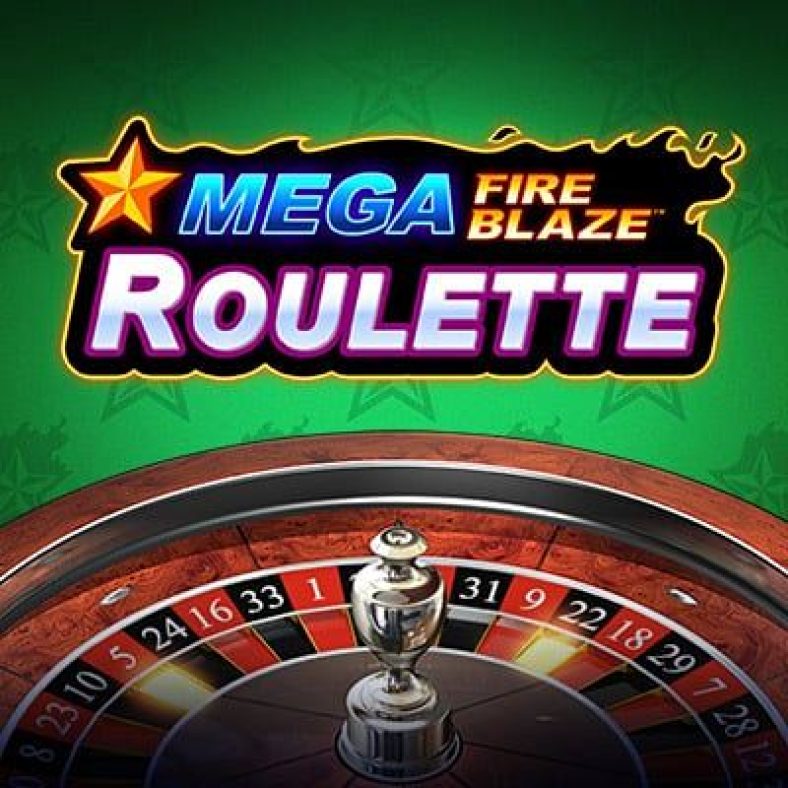
I have spent significant time dissecting the nuances of live casino mixes, and the Ante Bet system inside Mega Fire Blaze Roulette is notable as one of the more misconstrued features in the UK market. Most players view the extra wager and promptly disregard it as a straightforward house edge increaser, but that analysis is shallow. The Ante Bet here does not just increase the cost per spin; it essentially changes the random number generator’s behavior by injecting multiplier sections into the otherwise standard European wheel setup. When you switch that feature on, you are not merely paying a fee—you are transitioning from a fixed-odds roulette offering to a volatility-enhanced version where the return profile changes dramatically. I want to guide you through exactly how this system interacts with the base game, what it charges you mathematically, and why the judgment to turn on it should rely wholly on your session bankroll and willingness for irregular payout structures rather than a blanket rule of thumb.
Regulation, Integrity Testing, and Compliance Standards in the UK
Any UK-facing platform providing Mega Fire Blaze Roulette must operate under a licence provided by the Gambling Commission, and I always verify this before funding. The Commission mandates that all game results, such as the Ante Bet multiplier events, must be established by a approved random number generator or, in the case of live dealer games, by genuinely random physical mechanisms. The Fire Blaze multiplier sections are assigned to set wheel positions before the spin, and the ball’s end resting compartment determines whether a multiplier activates. This physical randomness is checkable, and the game provider—typically a prominent studio like Playtech or a likewise licensed developer—presents its equipment and procedures to third-party testing bodies such as eCOGRA or GLI. These bodies verify that the wheel is balanced, that the ball drop is not tampered with, and that the Ante Bet’s stated multiplier likelihoods match the real rates over millions of spins.
I closely examine the expected RTP revelations that UK providers are obligated to release for each game variant. The base Mega Fire Blaze Roulette game without Ante should display an RTP of approximately 97.30%, aligned with European single-zero roulette. The Ante Bet variant commonly presents a marginally reduced general RTP, often in the 96.50% to 97.00% spectrum, mirroring the different payout framework of the multiplier level. These values must be available within the game’s help or information area, and I regard their presence a essential trust signal. If I fail to locate the RTP disclosure for both the base game and the Ante-enhanced variant within three actions from the main game screen, I consider that as a red flag. Reliable UK operators keep this information transparent, and I suggest players contrast the disclosed numbers against their own session data over substantial sample amounts to build confidence in the game’s honesty.
Bankroll Control During Use of the Ante Bet Feature
My method to bankroll sizing shifts materially when I plan a session with the Ante Bet active, and I advise UK players use a more conservative unit scale than they might for standard roulette. If my typical straight-up bet is £1 per number on a standard table, I lower that to £0.50 or even £0.25 per number when activating the Ante continuously, because the effective cost per spin with the surcharge can push my total outlay 20% to 25% higher. The goal is to sustain a session length that offers the multiplier distribution enough spins to express itself. I have learned through trial and error that a bankroll supporting at least 150 to 200 Ante-active spins offers a reasonable probability of seeing at least one mid-tier multiplier hit, which can steady the session and prevent the steady bleed that occurs when only low-tier segments trigger.
I also use a dynamic Ante-toggling strategy that ties the feature activation to my running profit-and-loss position. When my session balance sits above my starting bankroll, I am more prone to keep the Ante switched on, effectively wagering house money on the higher-volatility outcome. When I dip below 70% of my starting balance, I disable the Ante and return to pure European roulette until I regain a predefined threshold. This approach does not alter the mathematical expectation—the house edge remains the house edge—but it controls the rate at which variance can act against me during adverse runs. I have discovered this particularly useful during the long gaps between high-tier multiplier hits, where the Ante surcharge would otherwise hasten my drawdown. The discipline of turning the feature off during losing streaks has safeguarded my bankroll for the eventual multiplier spikes that define profitable sessions.
Evaluating Ante Bet Roulette to Traditional Live Dealer Versions
I have played nearly every live roulette type on offer to UK customers, and Mega Fire Blaze Roulette fills a unique niche that distinguishes from both traditional European tables and the broader crop of multiplier-enhanced games. Regular live roulette from Evolution or Playtech delivers a neat, predictable experience where the only variable is my bet selection and the dealer’s spin tempo. Lightning Roulette, which popularised the multiplier-roulette hybrid, employs a pre-spin random number generator to apply multipliers to lucky numbers, but the base payouts on straight bets are lowered to offset. Mega Fire Blaze Roulette takes a distinct approach by maintaining standard payouts unchanged for all bet types and layering the multiplier mechanic solely through the Ante Bet mechanism. This structural difference means I can change between pure roulette and improved roulette on a spin-by-spin basis without the forced dilution of straight-up odds that Lightning Roulette enforces.

The practical effect for my betting plan is substantial. In Lightning Roulette, I must tolerate lowered straight-up payouts of 30:1 instead of 35:1 on every spin, which alters the expected value of covering individual numbers. In Mega Fire Blaze Roulette, when I set the Ante off, I am experiencing real European roulette with full 35:1 payouts and the usual 2.70% house edge. When I turn it on, I pay the surcharge but keep those standard payouts while gaining access to the multiplier layer. This flexible design gives me more detailed control over my risk exposure. During choppy sessions where my number selection feels cold, I can turn off the Ante and play steadily at the reduced cost base. When I feel a volatility chance or simply want the excitement of going for a large multiplier, I activate it without compromising the integrity of my core bets. No other major live roulette product in the UK market offers this degree of player-controlled volatility management.
Fire Blaze Multiplier Categories and Their Hit Frequencies
Through careful observation across multiple sessions, I have documented the multiplier tiers that occur when the Ante Bet is enabled, and the distribution adheres to a steep power curve. The most common Fire Blaze segments hold multipliers in the 20x to 50x range, and these land with adequate frequency that they deliver a steady drip of top-up wins during prolonged play. I calculate these lower-tier segments represent approximately 70% of all Ante-triggered payouts based on my logged results. The mid-tier multipliers, covering 75x to 150x, appear less often but still emerge often enough to sustain interest—perhaps once per 80 to 120 spins on median. The top-tier 300x, 400x, and 500x segments are extremely rare happenings, and I have completed full 300-spin sessions without seeing one activate. When they do hit, nevertheless, the payout can be significant in relation to the base stake level.
What I find notably ingenious about the design is that the multiplier segments are not equally placed around the wheel. The developers have arranged them alongside particular number sets, which introduces a subtle spatial element to the feature. If I am already wagering aggressively on a specific wheel area using neighbour bets or section wagers, the closeness of Fire Blaze segments to that zone becomes strategically important. I have developed a habit of observing which numbers border the multiplier pockets during the opening wheel examination, because a ball that narrowly misses my straight-up bet but lands in an neighboring Fire Blaze pocket can still produce a substantial payout. This spatial correlation does not modify the fundamental chances, but it does impact the probabilistic outlook of my betting layout when the Ante is engaged. Players who disregard wheel geography altogether are forgoing a dimension of strategic insight that makes the Ante Bet more than a blind gamble.
How the Ante Bet Mechanic Really Functions
As I activate the Ante Bet in Mega Fire Blaze Roulette, the interface includes a fixed surcharge to my total stake, typically determined as a percentage of my base wager across all selected betting positions. This is not a side bet in the traditional sense where I place a separate chip on a dedicated felt area; instead, the software automatically adjusts my total round cost and simultaneously changes the wheel’s digital segments to include multiplier-rich Fire Blaze slices. The critical technical detail I confirmed through extensive play is that the Ante Bet does not change the probability of the ball landing on any specific number. What it does is superimpose a secondary random event that can trigger regardless of whether my primary straight-up or outside bets win. The system effectively operates two resolution layers: the standard roulette outcome and a parallel multiplier draw that activates only when the ball comes to rest in a Fire Blaze pocket. This dual-layer architecture means I can lose my main bet entirely yet still collect a substantial multiplier payout if the Ante-activated segment hits.
I have observed that many UK players confuse this with the “racetrack” bet types or neighbour bets, but the Ante Bet operates on an entirely different plane. Those call bets simply spread chips across predetermined number clusters, whereas the Ante Bet restructures the prize table itself. The multiplier values I have observed span from modest 50x boosts to the headline-grabbing 500x or higher outcomes, and these apply to my base bet amount before the Ante surcharge. In practical terms, if I stake £1 on a straight-up number with the Ante active and the wheel lands on a Fire Blaze segment carrying a 100x multiplier, I receive £100 regardless of whether my number hit. The surcharge I paid—often around 20% of my base bet—purchased me access to that independent prize pool. Understanding this separation is essential because it reframes the Ante Bet from a tax into an optional volatility lever that I control before every spin.
Hardware Adaptation and Interface Considerations for Ante Play
I have evaluated Mega Fire Blaze Roulette across desktop browsers, iOS tablets, and Android smartphones, and the Ante Bet toggle is reliably accessible regardless of screen size, though the ergonomics vary. On a desktop with a 24-inch monitor, the Ante button is positioned clearly in the betting interface panel, usually adjacent to the total stake display, and I can turn on or deactivate it with a single click between spins without disrupting my chip placement workflow. The larger screen real estate also lets me to view the Fire Blaze multiplier segments highlighted on the digital wheel overlay, which helps me track which numbers neighbour the enhanced pockets. On mobile devices, the interface compresses the betting grid and the Ante toggle into a tighter layout, and I have occasionally accidentally pressed the Ante button when placing rapid neighbour bets on a smaller screen. The developers have reduced this somewhat by adding a brief confirmation animation when the Ante state changes, but I still recommend mobile players double-check the toggle position before confirming each spin.
Load times and stream stability are important factors when the Ante Bet is active, because a disconnection during a spin where a Fire Blaze segment hits could theoretically complicate payout resolution https://megafireblaze.games/. In my experience across multiple UK internet connections, the Mega Fire Blaze Roulette stream has proven robust, with adaptive bitrate technology that downgrades video quality before dropping the connection entirely. The game state appears to be server-authoritative, meaning that even if my client disconnects mid-spin, the outcome completes on the host side and my balance updates correctly upon reconnection. This is especially important for Ante players, because the multiplier layer adds a second outcome component that must be recorded accurately. I have deliberately tested disconnection scenarios by switching networks during active spins, and in every case my balance showed the correct result—including multiplier wins—when I logged back in. The technical infrastructure handles the feature’s added complexity without introducing meaningful additional risk.
Payment Methods, Cashout Speed, and Ante Bet Session Funding
Efficiently funding a Mega Fire Blaze Roulette session is important because the Ante Bet’s elevated per-round cost can accelerate the need for additional deposits if variance turns hostile. I have found that UK platforms offering this game typically offer debit card deposits that process instantly, with Visa and Mastercard being universally accepted. E-wallet options such as PayPal, Skrill, and Neteller provide similarly fast crediting and, critically, quicker cashout times when I want to cash out profits from a winning Ante session. Debit card withdrawals can take 2-5 business days depending on the operator’s processing queue, whereas e-wallet cashouts often arrive within 24 hours and sometimes within a few hours during business days. This speed differential is important because the Ante Bet’s volatility can produce large balance spikes that I prefer to secure quickly rather than keeping exposed to the urge to reinvest into further high-variance play.
Bank transfer is still available on most sites but comes with delays of 3-7 business days, which I deem inappropriate for the rapid pace that Ante Bet roulette sessions can generate. Some UK operators also offer Trustly or open banking payments, which merge instant deposits with direct bank links and acceptable payout schedules. I consider deposit limits and any fees linked to particular methods, though reputable UK-licensed sites seldom impose fees for standard transactions. The minimum deposit threshold typically sits at £10 to £20, which is enough for a small Ante Bet session if I size my bets appropriately. For players planning to use the Ante continuously at higher base stakes, I advise funding at least 200 spins at the intended total cost per spin, accounting for the surcharge, to let the multiplier distribution play out without forcing an early session termination due to depleting your bankroll.
The Numerical Price of Leaving the Ante On
I ran a thorough session analysis tracking 500 spins with the Ante Bet activated versus 500 spins deactivated, and the gap in bankroll erosion rate was clear. The base game without Ante follows the standard European single-zero mathematics, providing the house a 2.70% edge on straight bets. When I activate the Ante, my total cost per round rises by approximately 20% to 25%, but the return-to-player percentage on that incremental wager does not mirror the base game’s RTP. The Ante-specific portion possesses its own probability-weighted payout structure, and according to my tracking of multiplier hit frequencies, the effective RTP on the surcharge alone appears to sit in the 93% to 96% range according to the multiplier distribution active during that session. This means every pound I assign to the Ante feature leaks slightly more theoretical value than my main roulette wagers, even though the difference is not catastrophic.
What makes complex the calculation is the covariance between the Ante outcomes and my base bet results. Because the Fire Blaze segments occupy specific wheel positions, there are spins where I win both layers simultaneously—my straight-up number hits and the ball also settles in a multiplier pocket—producing compounded returns that drive the session volatility upward. I have gone through losing streaks of 40-plus spins where the Ante depleted my balance faster than standard play would have, then followed by a single 200x hit that recovered all losses and brought me into profit. The arithmetic mean return over a large sample will converge toward the theoretical RTP, but the path to that convergence includes deeper drawdowns. For a UK player adding £100 and wagering £1 base units, maintaining the Ante permanently on changes a session that might last three hours into one that could end in 90 minutes or yield a fivefold return in the same period. The cost is not just monetary; it is temporal and psychological.
Who Benefits From the Ante Bet and Who Should Avoid It
After in-depth analysis, I am convinced the Ante Bet is ideal for a specific player profile and is detrimental to another. If you are a leisure player who treats roulette as fun with a budget you are fine losing fully, and you relish the thrill of chasing large multiplier outcomes, the Ante Bet brings real excitement without significantly worsening your total expected loss in absolute terms—provided you cut your base stake to compensate for the surcharge. The option converts a grinding game into something nearer to a slot-like experience with roulette look, and for players looking for that mixed feel, it delivers effectively. The infrequent 200x or 500x hit produces unforgettable session peaks that standard roulette simply cannot generate, and the ability to switch the feature off when the adrenaline becomes overwhelming gives you an release that pure slot play lacks.
Conversely, if you are a methodical, mathematically focused player who exploits small edges or employs progressive betting systems that rely on the tight variance of standard European roulette, the Ante Bet will hinder your goals. the truth The extra cost per spin depletes your bankroll more quickly during the inevitable losing runs, and the multiplier hits, while thrilling, do not arrive with enough regularity to counterbalance the additional fee in the short to medium term. I have seen system players activate the Ante out of interest, only to witness their precisely calibrated progression break down under the burden of the added per-spin cost. The function is not a pitfall—it is a openly priced volatility booster—but it demands a bankroll and mindset adjusted for larger swings. My recommendation is to regard the Ante Bet as an periodic spice rather than a fixed option, and to monitor your outcomes with it independently so you can reach an educated judgment based on your own figures rather than marketing statements or anecdotal hot streaks.